Stride vs GitHub Projects: when GitHub-native PM stops scaling.
GitHub Projects (v2) is GitHub's built-in project management: issues, pull requests, and milestones in a flexible board/table/roadmap layout. Free with any GitHub plan. Stride is an AI-native delivery platform that adds PRDs, ADRs, test management, defect lifecycle, and AI generation that GitHub Projects deliberately doesn't cover.
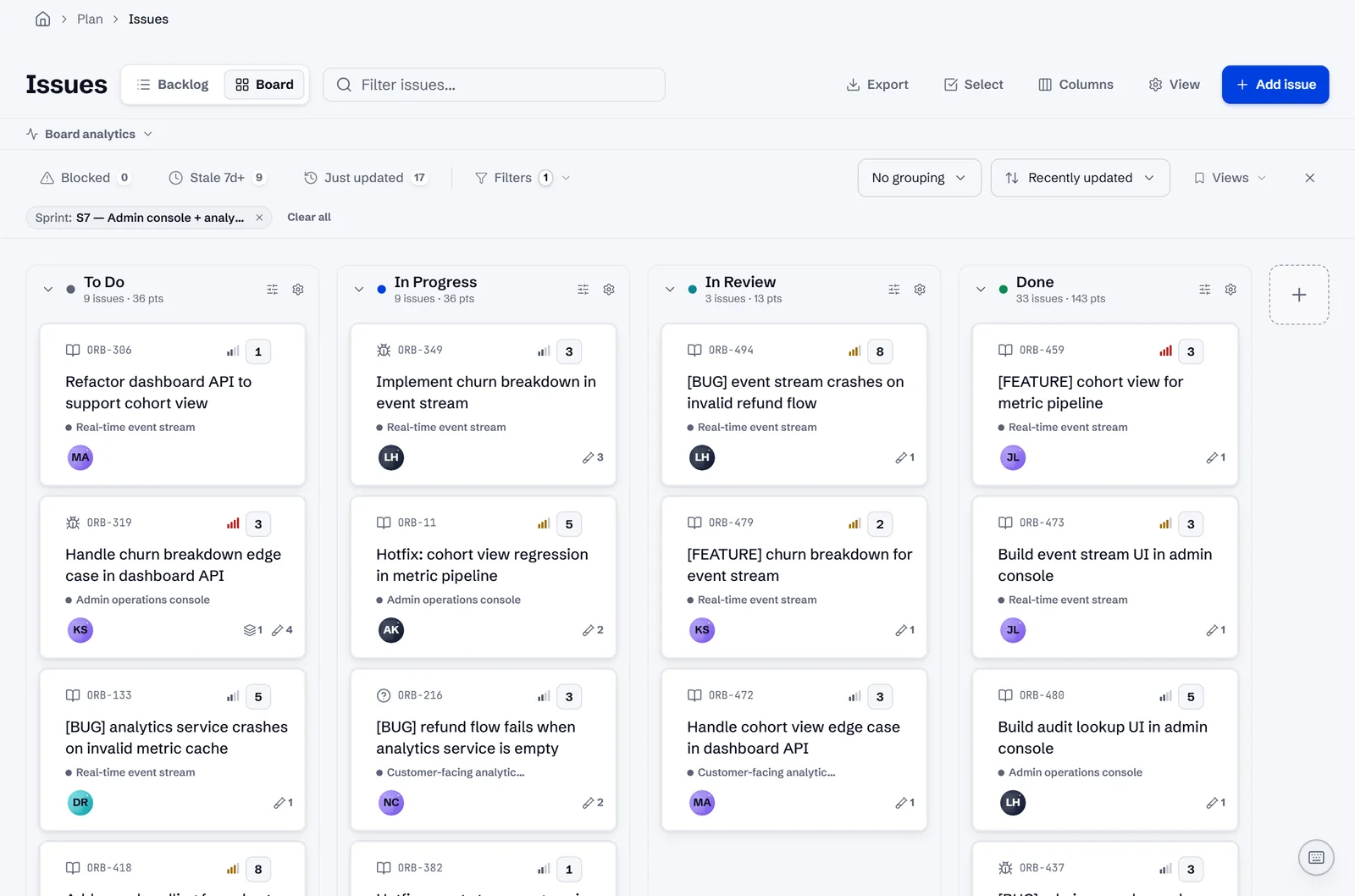
See it for yourself
Start at $15/seat/month. Load the sample project in 5 seconds and explore every module before committing your team.
Get started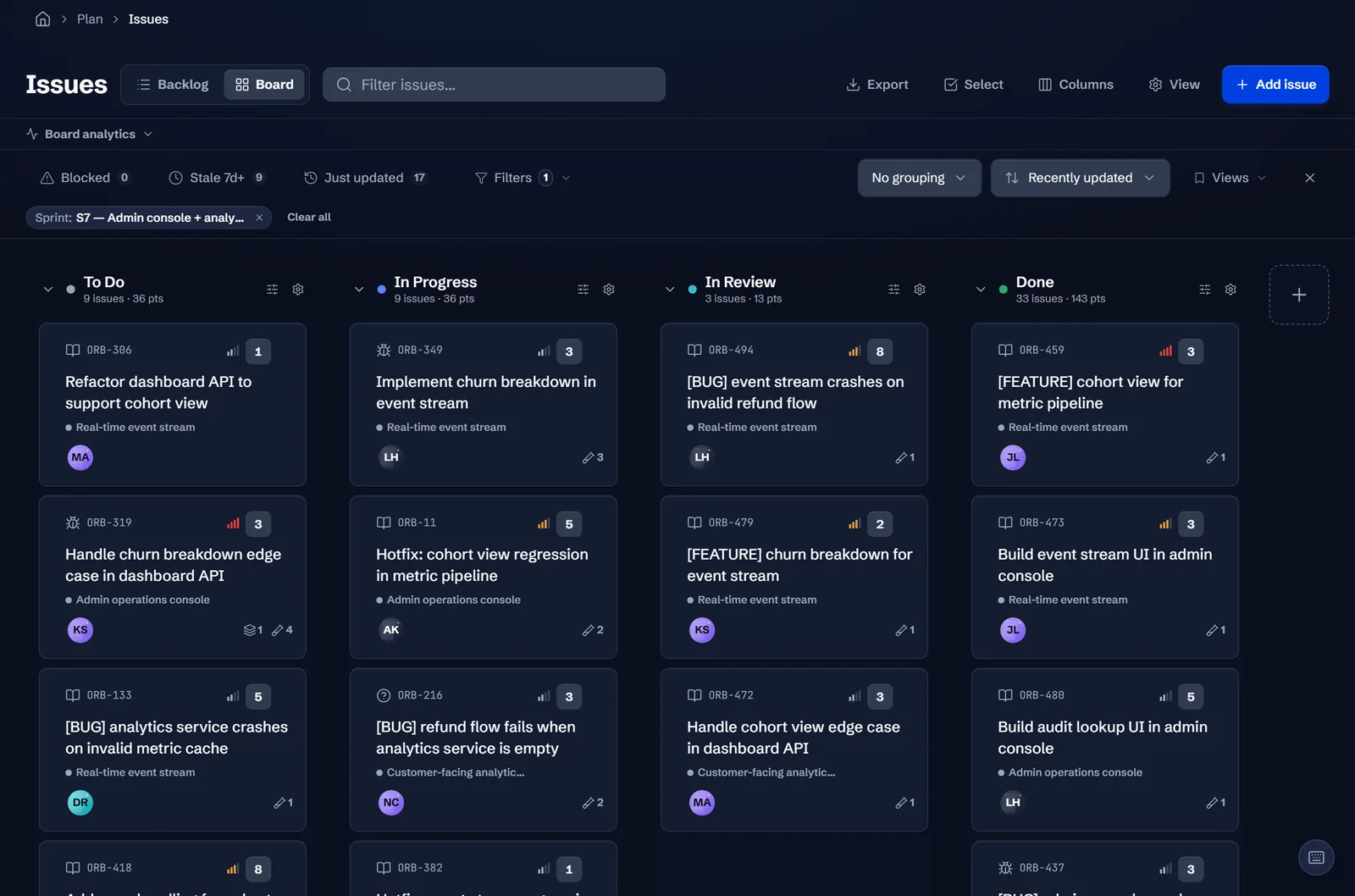
Engineering teams who need PM work types above the issue level (PRDs, epics, ADRs, test cases) with AI assistance.
Engineering-only teams (no PM/QA) whose work fits cleanly into issues + PRs and who want a free, GitHub-native PM surface.
Feature comparison
| Feature | Stride | GitHub Projects |
|---|---|---|
PRDs / ADRs / test cases as first-class | ||
AI generates acceptance criteria, test cases | ||
Sprint capacity model (PTO + meetings + velocity) | Manual | |
Cross-repo typed hierarchy (PRD → epic → story) | Issues only | |
GitHub-native PR/branch integration | PR links and status | Native |
Pricing | $39/seat/mo | Free with GitHub |
GitHub Projects is included free in every GitHub plan, including the Free tier. Stride at $39/seat is hard to justify if your team's needs end at "issues + PRs + a board." The case for Stride starts when you need PRDs, ADRs, test management, and AI on delivery artifacts, work types GitHub doesn't cover.
Where Stride wins
- PRDs, ADRs, test management, defect-with-prediction, work types GitHub Projects intentionally doesn't implement.
- AI generates acceptance criteria, test cases, ADRs from connected delivery context. GitHub Copilot writes code; GitHub Projects has no AI on PM artifacts.
- Sprint planning with capacity model (PTO, meetings, on-call, velocity). GitHub Projects supports iterations but capacity arithmetic is manual.
- Cross-repo work types (a single PRD spawning stories across 5 repos). GitHub Projects can pull issues from multiple repos but lacks the typed hierarchy above issue level.
Where GitHub Projects wins
- GitHub Projects is free. Stride Pro is $39/seat/month. The cost-of-zero is hard to beat when your needs fit GitHub's primitives.
- GitHub Projects integration with PRs, commits, branches, and CI is genuinely native: issue auto-closes from commit messages, status from PR review state, board cards from new branches. Stride integrates with GitHub but the GitHub-native depth isn't the same.
- GitHub Projects v2 is mature, fast, and well-loved by engineering-only teams. For "issues + PRs + a board," nothing beats the native experience.
Editorial perspective
GitHub Projects v2 provides issues, pull requests, milestones, custom fields, views, and automation without a separate project-management licence. It is a strong fit when engineering work can stay inside those primitives.
The tradeoff appears when an issue must stand in for a PRD, ADR, test case, or defect. Labels and custom fields can distinguish those records, but they do not create typed relationships such as PRD-to-story decomposition, acceptance-criterion-to-test coverage, or roadmap progress derived from linked delivery work. Reproducing those relationships requires custom conventions, workflows, and reporting.
Evaluate the boundary directly: if issues, pull requests, and milestones describe the work your team needs to manage, GitHub Projects may remain the simpler choice. If product requirements, architecture decisions, tests, and defects need first-class structure and traceability, Stride is designed for that model.
Questions
Can I sync GitHub issues with Stride stories?
Why not just stay in GitHub Projects?
Does Stride show PR status on stories?
See Stride beside GitHub Projects on your own work
Plans start at $15 a seat a month. Load the sample project and open every module before you move your team.