Honest comparison
Modern AI-native delivery, not a self-hosted Rails app.
Stride vs Redmine: when free-and-self-hosted stops being free.
Redmine is the original open-source project management: issue tracking, time tracking, Gantt, wiki, repository integration. Free and self-hosted, used widely by ops-heavy teams who want full control. Stride is an AI-native SaaS that ships PRDs, ADRs, test management, defect prediction, and AI on delivery artifacts, none of which Redmine attempts.
stride.page/plan/issues
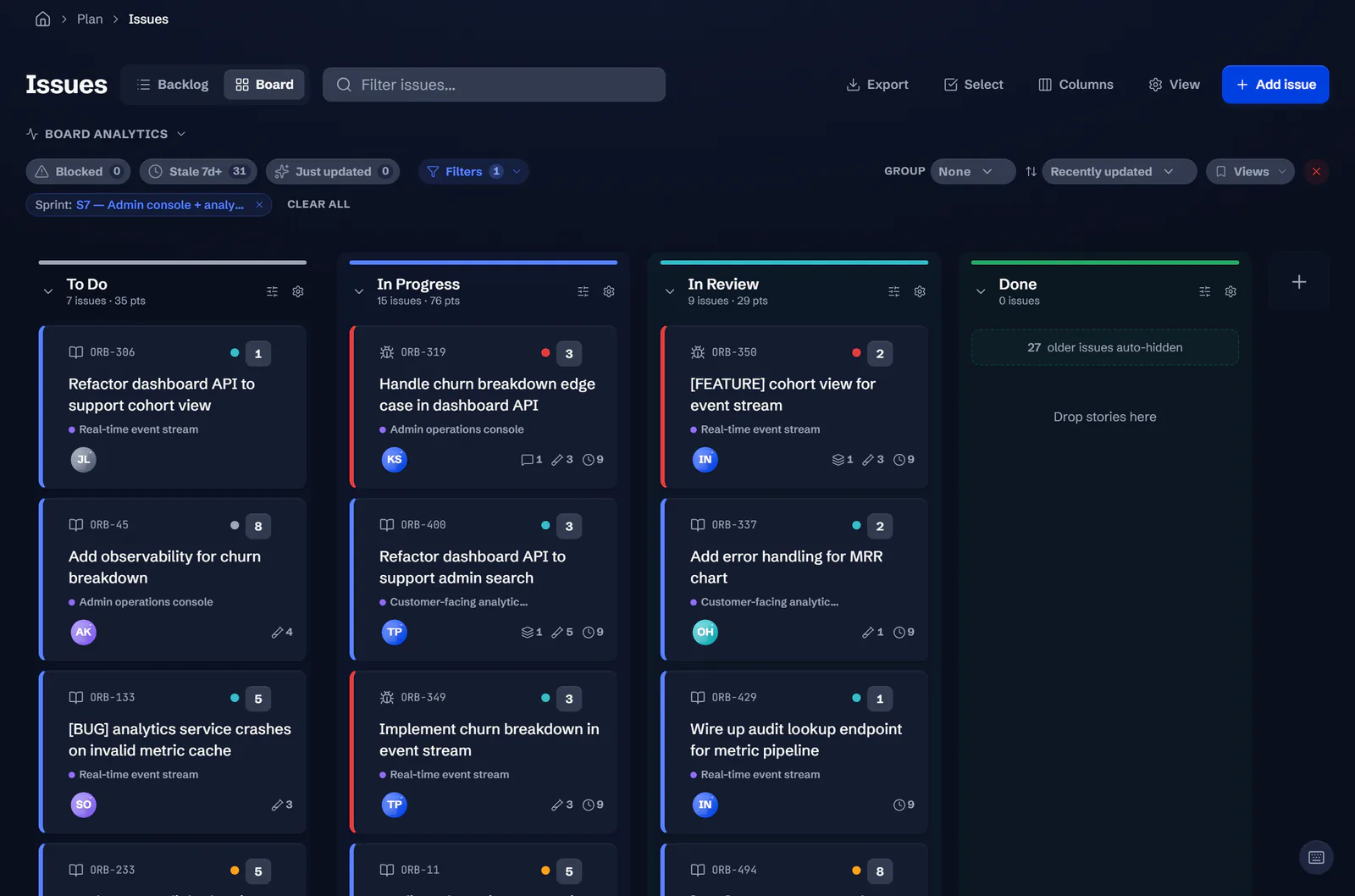
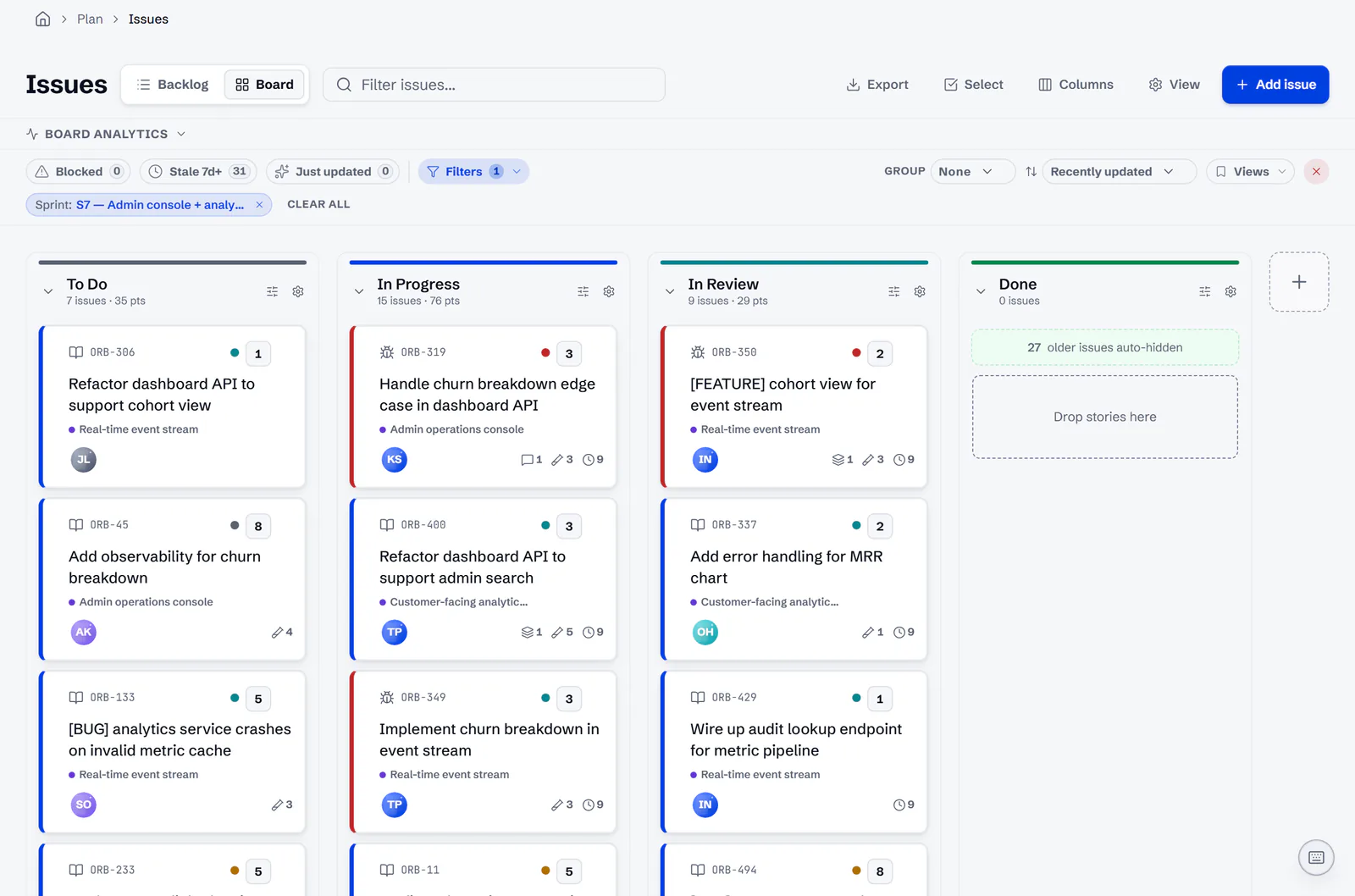
Feature comparison
| Feature | Stride | Redmine |
|---|---|---|
AI on delivery artifacts | ||
Modern UX | Dated | |
ADRs + test management + defect prediction | Via plugins (Redmine plugin) | |
Self-hostable / open-source | Enterprise only, via sales; not open source | |
Per-seat pricing | $39/seat/mo | Free (self-hosted) |
Where Stride wins
- AI on every delivery artifact (PRDs, stories, acceptance criteria, test cases, ADRs, release notes). Redmine has no AI.
- Modern UX shipped 2024-2026. Redmine's default theme dates to 2006; community themes help but the underlying UX assumptions are 20 years old.
- No ops overhead. Redmine self-hosted requires you to run Ruby + Rails + MySQL/PostgreSQL + a web server, then maintain plugin compatibility through major-version upgrades.
- Cloud-native architecture, SOC 2 in progress, GDPR-aligned. Redmine self-hosted compliance is your problem.
Where Redmine wins
- Redmine is open-source (GPL v2) and the software is genuinely free. Stride is $39/seat/month. For very-small-budget teams with ops skills, Redmine's zero-license-cost is hard to beat.
- Redmine has a huge plugin ecosystem (1500+ plugins) for time tracking, Gantt charts, agile boards, helpdesk integration. The community is mature.
- Self-hosted Redmine gives you full data sovereignty and unlimited users for $0 license cost. Stride is SaaS-first; private-cloud deployment is available on Enterprise through sales.
Questions
Can I migrate from Redmine?
Yes via CSV. Redmine's built-in CSV export covers issues, custom fields, time entries, and trackers. Stride's CSV import brings the issues in — trackers map to work-item types, custom-field columns can map onto standard fields; time entries don't import. Wiki content exports as Textile/Markdown.
What about self-hosting Stride?
Stride's Enterprise plan offers private-cloud deployment through sales, with a one-time setup fee. There is no Redmine-style package to download and run on your own server.
My team likes Gantt charts. Does Stride do those?
Stride supports milestone + roadmap timeline views. Full Redmine-style Gantt (dependencies, resource leveling, critical path) is not a Stride strength.